
The word “pur”means a single “lot”; “purim” is the plural form of “pur” and means “lots”.
Casting lots was a method used by the Hebrews to determine the will of God. Lots could be sticks with markings, or stones with symbols, which were thrown into a small area, and then the result was interpreted. “The lot is cast into the lap, but it’s every decision is from the LORD.” (Proverbs 16:33). The practice of casting lots is mentioned in many instances throughout the Bible. The closest modern practice would probably be like flipping a coin in a game of chance. However, it is chance by divine design.
Going about his business in the king’s court one day, Esther’s cousin Mordechai, overheard a plot to assassinate King Xerxes of Persia. He reported the details to Queen Esther who passed this information on to the king. The plotters were arrested and hanged. (Esther 2:19-23)
Haman was later promoted to the King’s chief councilor. He was a descendant of the Amalekites, the nomadic people who harassed and attacked the Hebrews during their exodus from Egypt. They were so wicked that God commanded King Saul to attack them and destroy everything that belonged to them. He instructed Saul not to spare anyone. (1 Samuel 15:3) Saul did not fully obey God’s command and allowed some of these evil people to live. Haman descended from those who were left.
All the royal officials at the king’s gate knelt and paid honor to Haman, for the king had commanded this concerning him. But Mordecai would not kneel or pay him honor. When Haman saw that Mordecai would not kneel or pay him honor, he was enraged. When he learned who Mordecai’s people were, he decided to destroy all of his people, the Jews. (You can read the story in the book of Esther, chapter 3)
In the first month, Nisan, in the twelfth year of King Xerxes, the lot (pur) was cast in Haman’s presence to determine the day and the month for the destruction of Mordecai’s people on a single day, and the lot fell on the thirteenth day of the twelfth month, Adar. Haman convinced the King to write a decree for their destruction.
However, Mordecai found out about Haman’s plot and begged Queen Esther to intercede with the king on behalf of her people. For Esther, the time of decision had arrived. She asked Mordecai to get her countrymen to join her in a three-day fast, concluding her message with a statement that resonates down to this day in its simple faith and courage: “In case I must perish, I must perish.” ( Esther 4:15-17) – Until now, she had kept her identity secret.
Haman didn’t know that Esther was related to Mordecai, or even that she was a Jew. He had built the gallows for Mordecai, 75 feet high. Esther gathered courage and invited the king together with Haman to a meal. Esther opened up to the king and told him that there was a plot to kill her and her people. The king became angry and demanded to know the person behind such a wicked plot. She pointed at Haman.
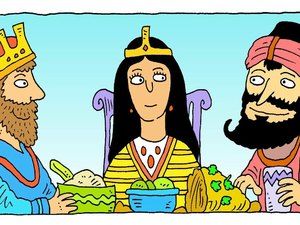
The angry king went outside to ponder about the news. In the meantime, Haman tried to plead with Esther to save his life because he knew that such an act would attract a death sentence. In the process of pleading with Esther, he fell on her bed as a result of the fear and anxiety. King Xerxes became even more angry when he found Haman in such proximity to his wife.
Haman was executed through hanging, just as he had planned for Mordecai. In Persia, once a decree was ordered, it could not be recanted. But the king issued a counter-decree, allowing all the Jews to have weapons to defend themselves.
Purim is a story of people standing in their faith against evil with courage that did not compromise. In the end, the Almighty set his people free, and punished those who planned evil.
 Standing with Israel