
Bethlehem is nestled in the hill country right outside of Jerusalem. A mild climate and plentiful rainfall contribute to consistently bountiful harvests in the town’s fields, orchards, and vineyards. The fertile land is probably the reason why this area was first called Bethlehem or Beit Lehem, which means, “house of bread.”
During Jacob’s long journey back to his homeland, his beloved wife Rachel dies while giving birth to their second son, Benjamin. Instead of burying Rachel there, Jacob chose to lay his wife to rest right outside Bethlehem. (Genesis 48:7) The prophet Jeremiah wrote: “A voice is heard in Ramah, weeping and great mourning, Rachel weeping for her children and refusing to be comforted.” Rachel’s tomb still stands near the entrance to Bethlehem and is considered a holy site to the Jewish people.
After the death of her husband and sons, Naomi decided to return to Bethlehem, the home of her ancestors. Naomi’s Moabite daughter-in-law, Ruth, insisted on accompanying her saying, “Where you go, I will go, and where you stay I will stay.” (Ruth 1:16) When the two arrive in Bethlehem, Naomi sends Ruth to work in the field of a wealthy relative named Boaz. He becomes their kinsman redeemer, marries Ruth, and they have a son named Obed, who was the grandfather of King David.
The Torah tells us that the prophet Samuel went to Bethlehem in search of a new king. At God’s direction Samuel found and anointed a young shepherd boy named David. (1 Samuel 16:4-13). The city of Bethlehem would eventually bear the title of the new king.
The prophets foretold that another king would rule and reign forever from David’s line. “He will reign on David’s throne and over his kingdom, establishing it and upholding it with justice and righteousness from that time on and forever.” (Isaiah 9:7) “But you, Bethlehem Ephrathah, though you are small among the clans of Judah, out of you will come for me one who will be ruler over Israel, whose origins are from of old, from ancient times.” (Micah 5:2)
Because the fields surrounding Bethlehem were a short distance from the Temple, they were designated as holy pastures for raising sacrificial lambs. At Migdal Eder, the Tower of the Flock, generations of shepherds tended their lambs. According to (Exodus 29:38-46), two lambs had to be sacrificed every day. Before David was king, he raised sheep in the same Bethlehem pastures.
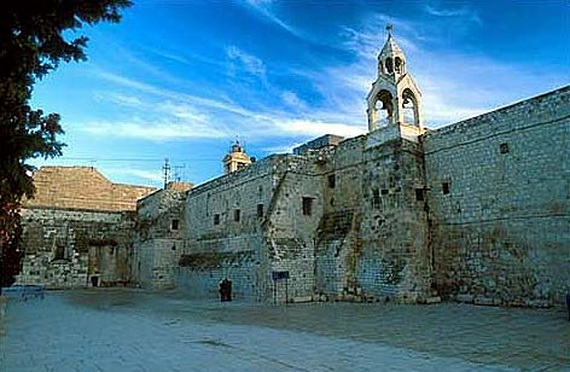
Each year, on December 25, Christians celebrate the birth of Jesus who was born in Bethlehem. But why were Mary and Joseph found so far from their hometown of Nazareth at a time so close to Mary’s delivery? The explanation begins with Caesar Augustus, the Emperor of Rome, who ruled from 27 BC-14 AD. Historians have branded Caesar Augustus as the greatest Roman Emperor of all time. His most notable act was his census plan. This census would prove successful in Augustus’s overall plan to collect taxes and transform Rome from a brick-and-mortar city to a marble empire.
The biblical account of nativity according to Luke 2, tells us that Jesus was born during the time the Israelites were called to participate in Caesar Augustus’ census. King Herod most likely would have used the opportunity of the Festival of Sukkot to perform the census. Joseph and Mary had to travel from the town of Nazareth to Bethlehem so that they could fulfill their duty. Why would the couple have to travel more than 80 miles to be counted? In deference to Jewish customs, Roman law required people who lived in Judea and the surrounding area to return to their ancestral homeland for census registration. Since Joseph belonged to the house and line of David, Bethlehem was his designated census hub.
Bethlehem is typically flooded with pilgrims and other celebrants in late December. However, this year it will be a sad, silent night in Bethlehem. The city of Jesus’ birth has canceled its annual Christmas celebrations because of the war between Israel and Hamas.
 Standing with Israel