The Battle between Good and Evil

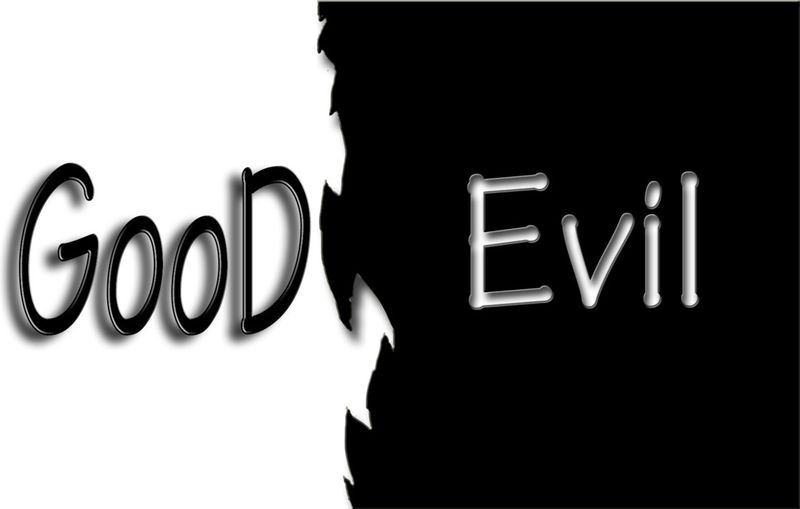
A battle between good and evil, regarding the character of God, His law and sovereignty over the universe, has been with humanity from the start.

The opening lines of Genesis describe a world of total chaos, a watery abyss that covers everything, and black darkness.” The world was unformed and void, darkness was on the face of the deep, and the Spirit of God hovered over the surface of the water.“

 (Genesis 1:2)

The world was without day and night. There was no need to mark time because the world had no purpose, no meaning.  It was a world of death, devoid of light. – Whatever God creates is perfect. He does not create chaos. Something must have happened to devastate the world.

The Bible tells us that before the earth was created, the Lord created angelic beings. A conflict must have originated a long time ago in heaven, when one of these heavenly beings tried to exalt himself above the Most High and became God’s adversary, leading into rebellion a portion of the angels. (Read Isaiah 14).

That spirit-being later introduced the spirit of rebellion into humanity – in form of a snake -who led Adam and Eve into sin.

It distorted the image of God and brought disorder into the newly created world.

The Bible explains in Genesis 6:11: The earth also was corrupt before God, and the earth was filled with violence.” (וַתִּשָּׁחֵת הָאָרֶץ, לִפְנֵי הָאֱלֹהִים; וַתִּמָּלֵא הָאָרֶץ, חָמָס.) The Hebrew text mentions the word Hamas, meaning violence. The great flood brought back these same images, as all life perished and the world returned to its primordial state. It was a world without law, without meaning, without purpose, without norms, without order. 

It is from the chaotic place at the beginning of Genesis that God spoke the first words. ‘Let there be light!’  The entire first chapter of Genesis describes God’s methodical creation of a universe in which life is possible. The first chapter in the Torah is the story of creation, that teaches us that above all, God is about life.  

Any person who invokes the name of God and embodies a death cult of destruction, desecrates God and God’s plans for this world.  They diminish the imprint of life and blessing and return the world to the dark primordial abyss. 

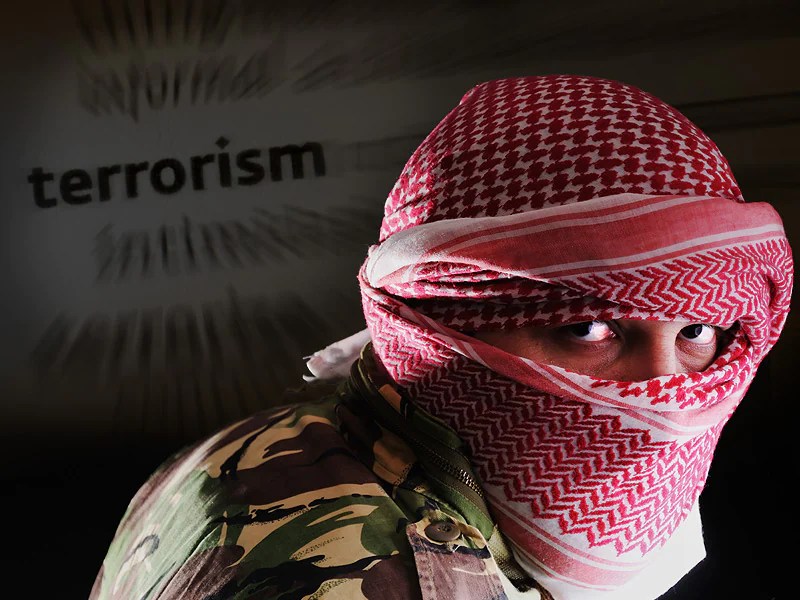
Anyone who claims that Hamas represents legitimate resistance fails to understand that Hamas and groups like them do not want peace and understanding.  They are willing to destroy anything and everything- including their own people- to fulfill their death drive. People who support them are accomplices, plain and simple. Hamas has crossed the boundary between civilization and savagery. They have given us a window to see the dark, violent, and turbulent abyss that proceeded God’s proclamation of light and life. The manifestation is evil and demonic.

The people from Gaza, and all of us, suddenly saw the darkness of destruction from those who deny the sacredness of all life, and so embracing the terrifying darkness we all fear.

According to the opening verses of the Torah, God declares there to be light and divides the light from the darkness. That light mentioned here is not a physical, but a spiritual light- the light of righteousness reserved for the upright. Other sources of light- the sun, moon and stars- were only created on the fourth day. 

Just as God created a physical world, God initially created a spiritual world to reflect the light of righteousness. In the opening chapters of Genesis, death and suffering only emerge because of the actions of people rebelling against the Divine will.

We must choose life. We cannot allow chaos and death to reign unchecked. Like God, we must keep these demonic forces at bay.  We must fight, we must stand up for truth, we must stand up for life like God. In the terrible murder of thousands of fellow Jews, not only has the state of Israel been violated, but the Divine image of every human being.  Hamas did not merely kill Jews; they violated the very definition of what it means to be human.

The battle between good and evil is a battle between life and death, between order and chaos.   

Who Is Amalek?

In the Book of Genesis we read that, Eliphaz, a son of Esau and his concubine Timna had a child named Amalek. Amalek grew up in Esau’s household, learning Esau’s pathological hatred of Jacob’s descendants from childhood on. His offspring became the nation of Amalek, and they lived to the south of the Land of Israel, in what is now known as the Negev Desert.

After the Jewish people crossed the Red Sea, they encamped in Rephidim, a barren location in the Sinai Desert. The people thirsted for water, and G‑d provided a miraculous well of water to accompany them on their journeys. While the Jews were still at Rephidim, recuperating from their escape from Egypt, the Amalekites launched a vicious surprise attack on them—even though the Jews did not invade Amalekite territory and were not even headed in that direction.

They were the first nation to attack the Jewish people after the Exodus from Egypt. The Amalekites mocked the Israelites, their God, and the rite of circumcision, by mutilating every Jew that fell into their power. They were acting like savages, raping women, killing children and elderly, much like we saw ISIS and Hamas act in our day. They were described as a nation having no fear of the Lord.

You find the story is found in the Book of Samuel, where God sent prophet Samuel to King Saul and told him to wipe out the Amalekites.

But King Saul and his people spared Agag, and the best of the sheep and of the cattle and the lambs, and all that was valuable, and would not utterly destroy them.

When Samuel found out about Saul’s disobedience, Saul lost his right to kingship.

To this day, history continues to struggle with the consequences of Saul’s mistake. It is said that the Amalekite nation survived and Agag lived long enough to father a child before he was killed by the Prophet Samuel.

One such example was Haman, the Persian minister, who tried to annihilate the Jews in the time of Queen Esther (355 BCE).  

Later, Hitler certainly espoused Amalekite ideology: “Yes, we are barbarians! We want to be barbarians. It is an honorable title to us … Providence has ordained that I should be the greatest liberator of humanity. I free man from … the degrading self-mortification of a false vision called conscience and morality … Conscience is a Jewish invention.” (Hitler Speaks, pp. 87, 220-222.)

God commanded the Jews to defeat the Amalekites, which they didn’t. God then warned the Jews that in the future Amalek would continuously reappear, in different generations, as an enemy of the Jews and they would continuously attack his chosen and need to be defeated. Not with truce or cease fire, because God commands total victory.

In the Hebrew Bible, the spirit of Amalek is therefore a demonic force that represents evil and destruction. The rabbis teach that there is a great difference between the spiritual nature of Amalek and that of other nations. They say the spirit of Amalek is Samael, the angel of evil, or Satan himself.

Signs in the Sky

Recently increased sunspot levels have led to higher frequencies of solar activity, such as solar flares and coronal mass ejections, which lit up the night sky. It was this solar activity that caused the beautiful phenomenon of spectacular auroras that were seen as far south as France and all over the United States. The northern lights – or the aurora borealis – are beautiful dancing waves of light that have captivated people for millennia. But for all its beauty, this spectacular light show is a rather violent event because energized particles from the sun slam into Earth’s upper atmosphere at speeds of up to 45 million mph. Luckily our planet’s magnetic field protects us from the onslaught. 

Last Wednesday, Jupiter and Venus appeared very close together in the night sky, with the two planets set to pass each other in what’s known as a conjunction. Conjunctions between planets happen frequently because the celestial bodies orbit around the sun in approximately the same plane as one another and trace similar paths across our sky. This conjunction was a striking spectacle to view.

Meteors, also known as shooting stars, are pieces of dust and debris from space that burn up in Earth’s atmosphere, where they can create bright streaks across the night sky. When Earth passes through the dusty trail of a comet or asteroid’s orbit, the many streaks of light in the sky are known as a meteor shower. Particularly large chunks of material can create an extra-bright fireball streak, but most meteors are still small enough to entirely burn up in Earth’s atmosphere. If a meteor makes it to Earth, it’s known as a meteorite. Before they hit atmosphere the objects are called meteoroids. 

A hefty meteor weighing around the same as a grand piano recently entered Earth’s atmosphere above Texas on Feb.15, showering the surrounding area with smaller fragments. One of these meteorite chunks has already been recovered and could help reveal more about our cosmic neighborhood, experts say. This type of space rock is known as a fireball meteor because of the bright flash given off as it breaks apart, due to friction between the fast-moving object and the air in the atmosphere.

A dazzling beam of light was seen across the dark California sky at about 2:20 a.m. on Thursday morning: a sudden glimpse of a meteor that disappeared within seconds, leaving behind a glowing tail that was observed by people and security cameras from more than 100 miles around.  

Genesis 1:14 tells us that the sun, moon and stars are signs to mark seasons, or appointed times, as well as days and years. These seasonal time changes occurred with the flood of Noah, the call of Abraham, the exodus, and the exile.

The Star of Bethlehem, appears in the nativity story of the Gospel of Matthew,  where Magi from the East were inspired by the star to travel to Jerusalem. Astrology was widely used at the time in Babylon, it’s therefore plausible that they were astrologers.

For centuries, scholars have suggested the Star of Bethlehem may have actually been a “great conjunction” of bright planets. There was a conjunction between Jupiter and Venus recorded at that time. Because planets move in their orbits at different speeds, and are located at different distances, sometimes they appear to pass one another in the night sky and look like one bright star.

Most years have 12 full moons, but 2023 will have 13, with two — which are supermoons — happening in August. Supermoons are brighter and closer to Earth than normal and therefore appear larger in the sky.

Additionally, there will be two solar eclipses and two lunar eclipses in 2023. Something to look forward to. —More spectacular signs in the sky!

Why the Dreidel?

The dreidel is perhaps the most famous custom associated with Hanukkah.

However, the dreidel game originally had nothing to do with Hanukkah; it has been played by various people in various languages for many centuries. It seems that spinning tops like dreidels were popular throughout the ancient Middle East.

Many believe that in 175 BCE, when the wicked Greek King Antiochus had forbidden all Jewish religious worship, the Jews created the dreidel for them to learn Hebrew and study the Torah in secret.

The dreidel was a spinning top and a popular gambling device at that time. Jews studied the Torah orally with the use of dreidels, pretending to play them, so if Greeks raided these Torah scholars, they would find “gamblers” instead. This way, the Greeks would leave the Jews alone.

When Hebrew was revived as a spoken language, the dreidel was called, among other names, a ‘sivivon’, from the Hebrew word ‘sov’, meaning ‘spin’.

Some believe that this story is just a legend. The exact origins of the dreidel game remain unclear, although evidence suggests that gamblers from Babylon used blocks decorated with images of Ishtar and Ninurta (Roman counterparts of Venus and Saturn) that symbolized winning and losing.

According to an anthology about Jewish holidays called ‘Sefer Hamoadim’, the dreidel was created in ancient Rome or Greece, and brought to England by Roman settlers or soldiers. This explains why some English tops bear Latin/Roman letters.

Most scholars agree that the dreidel may have originated from the English spinning top called a ‘teetotum’ dating to ancient Greek and Roman times. Dreidels were made from all sorts of materials, in ancient times clay, but today silver and wood seem to be especially traditional. 

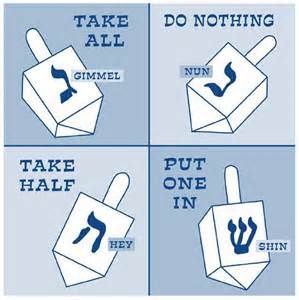
These are the letters A, D, N, and T. A stands for ‘aufer’, which translates as ‘take from the pot’; D stands for ‘depone’, which means ‘put into the pot’; N for ‘nihil’, meaning ‘nothing’; and T for ‘totum’, or ‘take all.’

Yiddish-speaking Jews gave the name ‘dreidel’ to the spinning top and the game. The term came from the German word ‘drehen’ which means ‘to spin.’ They also replaced the letters with their Hebrew counterparts.

The new letters on the dreidel mean the same, but G became gimel or ‘all,’ H became ‘hey’ or ‘half,’ N became ‘nun’ or ‘nothing,’ and S became ‘shin’, meaning ‘put in.’ These Hebrew letters inscribed on the dreidel’s sides make up the acronym for the Hebrew saying ‘Nes Gadol Hayah Sham,’ which can be translated as ‘A great miracle occurred there.’

This is in reference to the miracle which is what Hanukkah is all about, – the recovery of Jerusalem and the subsequent rededication of the Second Temple.

In England and Ireland there is a game called ‘totum’ or ‘teetotum’ that is especially popular at Christmastime. In English, this game is first mentioned as ‘totum’ ca. 1500-1520. The name comes from the Latin ‘totum’, which means ‘all.”’ By 1720, the game was called ‘T- totum’ or ‘teetotum’, and by 1801 the four letters already represented four words in English: T = Take all; H = Half; P = Put down; and N = Nothing.

In Hebrew, each letter has a numerical value. The numerical value of the dreidel’s nungimmelhey and shin is 358. This is also the numerical value of some key words in Hebrew. It’s the same as ‘Nachash’ – the snake that tempted Adam and Eve to eat the fruit from the forbidden Tree of Knowledge in the book of Genesis. It’s also the numerical value of the Hebrew word ‘Moshiach’, or Messiah, who will ultimately redeem the Jewish people.

Technology that can lead to Tyranny

When your life is dominated by something to the point where you almost lose control, that is tyranny. It comes in various forms; political, social, financial, religious, emotional, all these and more can become tyrannical.

Information technology is continuing to leap forward; biotechnology is beginning to provide a window into our inner lives—our emotions, thoughts, and choices. We already use voice and facial recognition and speak to Alexa or Siri.

Kids today are introduced at an early age to the fast-growing field of robotics. Schools stoke your child’s passion for engineering with fun, hands-on robotics courses. Since robots are physical devices, learning about robotics is a good way for kids to use their software development skills (like Scratch and Python) to program hardware. 

Major advances aided by surgical robots have been remote surgery, minimally invasive surgery, and unmanned surgery. Due to robotic use, the surgery is done with precision, smaller incisions, decreased blood loss, less pain, and quicker healing time. Articulation beyond normal manipulation and three-dimensional magnification help to result in improved ergonomics. Due to these techniques, there is a reduced duration of hospital stays, blood loss, transfusions, and use of pain medication. The existing open surgery technique has many flaws such as limited access to the surgical area, long recovery time, long hours of operation, blood loss, surgical scars, and marks.

Elon Musk envisions to control machines with just the power of thought. To that end, in July 2019, Musk and his team revealed that they had developed ultrafine ‘threads’ that can be woven into your brain to listen in on your neurons. His company has also built a robot that can perform the delicate surgery, under the supervision of a neurosurgeon. ‘Neuralink’ is a microchip that is surgically implanted in your brain, allowing you to connect with and even manipulate computers.

Ordinary people may not understand artificial intelligence and biotechnology in any detail, but they can sense that the future is passing them by.

Lots of mysterious terms are talked about at technology conferences and government think tanks, involving—globalizationblockchaingenetic engineeringAImachine learning—and many people, including myself, do not understand these terms.

The fear of machines pushing people out of the job market are, of course, nothing new, and in the past such fears proved to be unfounded. But artificial intelligence is different from the old machines. In the past, machines competed with humans mainly in manual skills. Now they are beginning to compete with us in cognitive skills. And we don’t know of any third kind of skill—beyond the manual and the cognitive—in which humans will always have an edge.

At least for a few more decades, human intelligence is likely to far exceed computer intelligence in numerous fields. Hence as computers take over more routine cognitive jobs, new creative jobs for humans will continue to appear. Many of these new jobs will probably depend on cooperation rather than competition between humans and AI. Human-AI teams will likely prove superior not just to humans, but also to computers working on their own.

More than five years ago, World Economic Forum (WEF) founder Klaus Schwab, talked about fusing the physical, digital, and biological world, and about microchipping everyone. Once chipped, we won’t need to do a thing to reach the digital world. “It will be natural,” noted the host. – Schwab wants to change what it means to be human.

The topic of robot takeover has historically been confined to the pages of science fiction books. However, it’s become an increasingly popular hypothesis in recent years as technological progress has continued at record pace. In fact, some of the brightest minds in the world are lending credence to this idea. Both Elon Musk, founder of Tesla Motors, and renowned physicist Stephen Hawking have warned that an A.I.-dominated world is no longer a matter of “if”, but “when.”

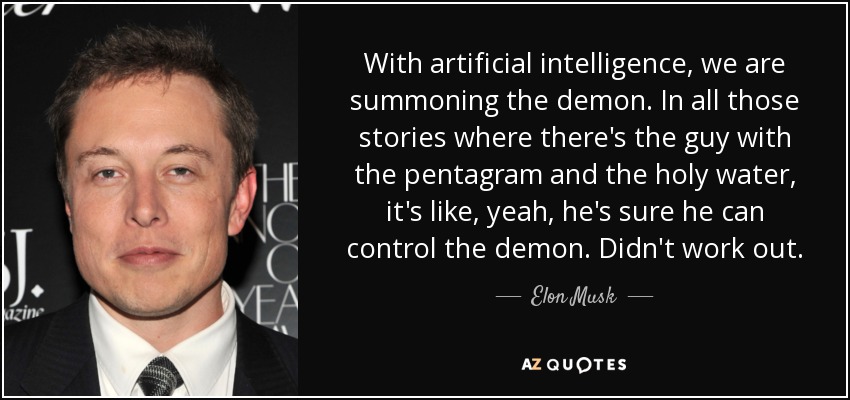
Think about it: for one, they are assuming that these ultra-intelligent creations would be interested in being worshipped as a deity. Isn’t that a massive gamble? What if they had violent or insidious tendencies? If this concept would be adapted by only a few people, they would be able to control the world. “With artificial intelligence, we are summoning a demon”, said Elon Musk, not a religious person himself.

At this point, it’s just as likely that an A.I. “Godhead” would see humans as an enemy; an obstacle that must be eliminated to make way for further technological expansion. The human race has spent eons creating gods…the difference is that in creating a technology god, there is a real possibility of such a god destroying free will. It sounds as if mankind is looking for another Golden calf. Remember, God said to not have idols. 

The evil powers that be in this world are taking AI very seriously, as they know it will help create Satan’s kingdom here on Earth in a much more overt way.

Chanukah – The Festival of Lights

The Hanukkah story is based on historical events that took place in 165 BCE in Jerusalem, when the land of Judea was ruled by Antiochus, a Syrian King.

“The wicked ruler Antiochus Epiphanes, son of King Antiochus the Third of Syria, was a descendant of one of Alexander’s generals. Antiochus Epiphanes had been a hostage in Rome before he became king of Syria in the year 175 B.C.” [1 Maccabees 1:10]

When Antiochus IV came to power, the Jewish people did not readily fit into his vision for his new empire. He wanted to revive the broken empire of Alexander the Great. This meant to embrace the Hellenistic way of life and the worship of the Greek pantheon, especially Zeus. By taking the epitaph Epiphanes (“God Manifest”), Antiochus even claimed to be Zeus incarnate. Many of the pagan nations embraced and welcomed these policies, but in the land of Judea they caused a cultural civil war, notably among members of the high priestly families.

The King ordered the Jewish people to reject all their rituals and beliefs and forced them to worship Greek gods. According to the books of Maccabees and the Jewish historian Josephus, Antiochus plundered the Jerusalem Temple and carried off the sacred vessels—to help finance his campaigns. He even went as far as to profane the most sacred space in the Temple – the Holy of Holies – by erecting idols within it and sacrificing pigs upon the altar, presumably to Zeus. 

The home of Mattathias, a priest in the village of Modiʿin, 17 miles northwest of Jerusalem, quickly became the center of resistance. With him were his five sons, John Gaddi, Simon Thassi, Judas Maccabeus, Eleazar Avaran, and Jonathan Apphus. When a Greek official tried to force Mattathias to make a sacrifice to a pagan god, he refused. However, another Jew stepped forward to make the offering. Watching this, Mattathias became so infuriated that he killed the man. This incident became the trigger for what history later recorded as the Maccabean revolt. More Jews rose up behind Mattathias and his five sons and fought the Greeks for their liberation. The family of Mattathias became known as the Maccabees, from the Hebrew word for “hammer”. Because they were said to strike hammer blows against their enemies.

Like other rulers before him, Antiochus underestimated the will and strength of his Jewish adversaries, and the powerful Greek army eventually became defeated. After three and a half years, the Jews won the war against impossible odds. In 164 BCE, Jerusalem was recaptured by the Maccabees. They found their Temple decimated.

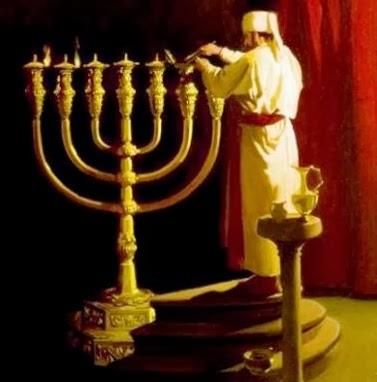
The seven-branched candelabra called a menorah that was supposed to burn perpetually, symbolizing God’s eternal presence and promise to the Jewish people, was extinguished. The Jews found only a small jar of oil that had not been defiled by Antiochus. In a leap of faith, they lit the menorah. The jar contained only enough oil to burn for one day, but miraculously the oil burned for eight days until new consecrated oil could be found, establishing the precedent that the festival should last eight days. 

Hanukkah, therefore, emerged as a celebration of the dedication, as the word itself suggests. It became the Jewish eight-day, wintertime “festival of lights,” celebrated with a nightly menorah lighting.

Ancient Spice Trade

In the very beginning – biblical beginnings – God created light, sky, dry land, seas, plants, trees, the sun, moon, stars, sea and flying creatures, land animals, and finally, humans. Herbs and spices were created even before Adam and Eve could enjoy them. According to Genesis 1:29, God gave the pair every seed-bearing plant on the face of the whole earth and every tree that had fruit with seed in it. “They will be yours for food,” states the Bible.

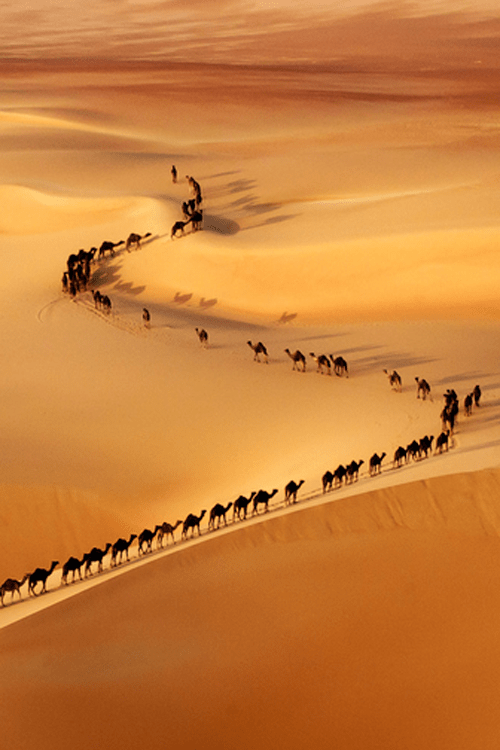
The spice trade was initially conducted by camel caravans over land routes most notably along the Silk Road via Turkey, Iraq, Iran, Afghanistan, Pakistan and India. The Silk Road is neither an actual road nor a single route. The term instead refers to a network of routes used by traders for more than 1,500 years, from when the Han dynasty of China opened trade in 130 B.C.E. until 1453 C.E., when the Ottoman Empire closed off trade with the West. It was an important trade route connecting Asia with the Mediterranean, North Africa and Europe. This Incense Route was the way to trade all kinds of articles, including Arabian frankincense and myrrh. Gold, rare woods and feathers came from Africa whilst precious stones, pearls, silk and spices arrived from India and further east. The Spice and Incense Route—those words conjure images of long camel caravans ferrying trade goods across the Negev desert to Jerusalem and points beyond. The Incense Trade Route was, in the main, controlled by the Arabs, who transported goods by camel caravans and for almost 700 years, it was a hazardous but very profitable trade. Spices such as cinnamon, cassia, cardamon, ginger, pepper, nutmeg, star anise, clove, and turmeric were known and used in Bible times and traded in the Eastern World. 

We first discover the ancient beginnings of the spice route in the biblical story of Joseph when his brothers sold him to a caravan of Ishmaelite traders on their way to Egypt (Gen. 37:25). The camel caravan, laden with spices, balm and myrrh, came from Gilead, a region in northern Israel famed for its medicines.

On this exotic desert road connecting the Orient with the Roman Empire, the precious commodities of frankincense and myrrh were transported over vast distances. The Queen of Sheba also paved the way for a spice route from Africa on her way to visit King Solomon in Jerusalem, bringing with her a great retinue and untold wealth in spices, gold and precious stones (1 Kings 10:2).

The Bible reflects an intimate knowledge of herbs and spices, which perfumed the Temple in Jerusalem (2 Chronicles 2:4), sweetened the home (Song of Songs 7:13) and seasoned meals during the Exodus (Numbers 11:5–6). Repeated references to herbs and spices indicate that the people of the Bible knew how these plants tasted, smelled, and looked; where they grew and what medicinal value they provided. In ancient times, herbs—the edible leaves, blossoms and soft stems of annuals and perennials—were used primarily as medicine. – The search for information on ancient medicine leads naturally from the papyri of Egypt to Hebrew literature. Though the Bible contains little on the medical practices of ancient Israel, it is a mine of information on social and personal hygiene. The Jews were indeed pioneers in matters of public health. 

The Christian Bible mentions magi who came from the East to do homage to Yeshua (Jesus) in Bethlehem (Matthew 2:1). Magi were priests in Zoroastrianism and the earlier religions of western Persia. They were told to bring gold, frankincense and myrrh, – valuable items monetarily – fine and expensive gifts. But more than that, these gifts had a ritual significance in the ancient world. Gold has always been an enduring symbol of incorruptible love, while frankincense and myrrh were ingredients in sacred incenses and anointing oil.

Frankincense for instance, is produced from trees of the genus Boswellia. It has an impressive pedigree and has been traded on the Arabian Peninsula for around 6,000 year. The aromatic resin is used in incense and perfumes; it produces a sweet, earthy, and woody aroma. Today, with a popular focus on well-being and alternative therapies, essential oils and aromatherapy have given frankincense a rebirth in the West. Some of these ancient herbal remedies are being re-discovered and making a comeback in alternative medicine.

Who is a Jew?

This question was never raised until the time of the second Temple period. Before that time, it was always understood that a Jew was a descendant of Abraham, Isaac and Jacob. It was determined by ethnicity, the fact of belonging to a population group made up of people who shared a common cultural background or descent. You were born into that ethnic group, and you stayed in it.

What happened in the first century? There were among the Jews different groups with different interests, political parties and religious parties. The rivalry between these groups created the necessity to define One Judaism. Those who did not conform to this Judaism were considered to be members of a fringe group or sect. However, they were still Jews.

During the Second Temple period, the Pharisees emerged as a Jewish social movement and a school of thought. Ever since Abraham, being Jewish always was an ethnicity, but now “Judaism” turned into a theology as conflicting sects of the Jewish people began to argue the question of what it really meant to be Jewish. Pharisaic beliefs became the foundational, liturgical, and ritualistic basis for Rabbinic Judaism.

After the destruction of the Second Temple in 70 CE, only two main groups remained, Rabbinic Judaism and Messianic Judaism. It was the rivalry between the two of them that brought up the question: “Who is the real Jew”?

Evidence of Jewish people following Yeshua as the Messiah can be traced back to about AD 30. All of Yeshua’s first followers were Jewish, and the writers of the New Testament were Jewish. These Jewish followers of Yeshua have been documented for several centuries as an established religious entity called the notzrim (“Nazarenes”).

The messianic group explained that a real Jew is a Jew in the heart, a Jew who follows the faith of Abraham. Paul, in the New Testament, distinguished between a Jew in the flesh and a Jew in the spirit. He himself was born to Jewish parents from the tribe of Benjamin, so Paul was ethnically a Jew.  

The rabbinic group said that it was not a question of being a Jew in the flesh or in the spirit, but that of following rabbinic Judaism. This is where ethnicity and theology became intertwined. Ethnicity and Theology become one. It is said that Rabbi Akiva was a convert to Judaism. Lacking ethnicity, he was accepted as a Jew because he followed the Rabbinic teachings. But Paul left the rabbinic teachings and therefore lost his Jewishness. As a follower of Yeshua he was considered to have become a Christian and was therefore no longer a Jew.

Before the first century Judaism was not a theology. It was just a people with lots of parties and sects and other means to please God. But nobody said: “You are not a Jew or you are a better Jew if you believe this or do that.” However today we face the problem of how can one be Jewish and follow a different faith? All over the world there are still different sects of Judaism and inter-Jewish rivalries and conflicts saying, you are not Jewish enough. There are the Orthodox, the Conservatives, the Reform etc.

But if you do not follow a certain Jewish theology, your ethnic Jewishness is at risk. I fail to understand the logic. If a Chinese person who followed Buddha now believes in Yeshua, the person is still Chinese. They don’t lose their ethnicity because of their belief. But if a Jewish person believes in Yeshua, he or she is no longer considered to be a Jew and can therefore not make Aliyah. How can you lose your ethnicity because of your belief?

“Who is a Jew?” It remains a controversial question within both mainstream Judaism and within Messianic Judaism. According to Rabbinical Judaism a Jew is any person whose mother was a Jew or any person who went through the formal process of conversion to Judaism.

So, who is a Jew? Why are today’s Messianic Jews no longer considered Jews?

Can a Jew born into a Jewish family lose his or her Jewishness?

Halloween – What are we celebrating?

The roots of Halloween go back to Samhain a pagan religious festival originating from an ancient Celtic spiritual tradition. Ancient Celts celebrated Samhain as the most significant of four quarterly fire festivals, taking place from October 31 to November 1 to welcome in the harvest and usher in “the dark half of the year.”

After the harvest work was complete, celebrants joined with Druid priests to light a community fire using a wheel that would cause friction and spark flames. The wheel was considered a representation of the sun and used along with prayers. Cattle were sacrificed, and participants took a flame from the communal bonfire back to their home to relight the hearth.

Celts believed that the barriers between the physical world and the spirit world break down during Samhain, allowing interaction between humans and spirits of the Otherworld. Because the Celts believed that the barrier between these worlds was breachable during Samhain, they prepared offerings that were left outside villages and fields for their ancient Celtic gods. Across the entire Celtic world, archaeological facts claim that there are more than 360 Celtic mythology deities.

Early texts present Samhain as a mandatory celebration lasting three days and three nights where the community was required to show themselves to local kings or chieftains. Failure to participate was believed to result in punishment from the gods, usually illness or death.

As the Middle Ages progressed, so did the celebrations of the fire festivals. Bonfires known as Samghnagans, which were more personal Samhain fires nearer the farms, became a tradition, purportedly to protect families from fairies and witches.

Carved turnips called Jack-o-Lanterns began to appear, attached by strings to sticks and embedded with coal. Later Irish tradition switched to pumpkins.

As Christianity gained a foothold in pagan communities, church leaders attempted to reframe Samhain as a Christian celebration. In the 9th century, Pope Gregory declared the celebration All Saints’ Day, on November 1. All Souls’ Day would follow on November 2. October 31 became known as All Hallows Eve, or Halloween, and contained much of the traditional pagan practices before being adopted in 19th-century America through Irish immigrants bringing their traditions across the ocean.

Halloween, as we know it today, is a modernized version of the Druidic festival of the dead.

Many people say “Happy Halloween,” without realizing the import of what they are saying because they do not understand the history of holiday.

Knowing the sinister roots of this festival, I don’t want to have anything to do with this tradition.

Sukkot, – a time to celebrate

Sukkot is a God-appointed holiday we are to celebrate for seven days from the 15th day of the month of Tishrei. It is one of three Jewish holidays that require a pilgrimage to Jerusalem. It would make sense that the Romans used it to take a census when all Jewish people were journeying to Jerusalem. A census required everyone to return to the place of their birth to be registered. Sukkot would have been a perfect time for people to stop at their birthplaces on their way to Jerusalem. We can imagine that adjacent cities – like Bethlehem – were filled with more people than they could accommodate.

The names used in the Torah are Chag HaAsif, translated to “Festival of Ingathering” or “Harvest Festival”, and Chag HaSukkot, translated to “Festival of Booths”. This corresponds to the double significance of Sukkot. The one mentioned in the Book of Exodus is agricultural in nature—”Festival of Ingathering at the year’s end” (Exodus 34:22) and marks the end of the harvest time and thus of the agricultural year in the Land of Israel. The more elaborate religious significance from the Book of Leviticus is that of commemorating the Exodus and the dependence of the People of Israel on the will of God (Leviticus 23:42-43). It is also sometimes called the “Feast of Tabernacles.”

The “Feast of Booths” commonly goes by another name, “The Season of our Joy”, for joy predominates on this holiday more than any other. Jewish people around the world construct “sukkot”, frail huts or booths that remind them of God’s provision and their dependence on Him. Each “sukkah” has a roof made with tree branches or lattice work, because they must be able to see the stars through the roof. It has to have at least three walls that are made of plywood or canvas. Jews give up the luxury of their homes to spend seven days and nights living in these “booths”.

They remember the presence and protection of God during the desert days, the cloud of glory that protected them from all natural threats of the wilderness, sun, sandstorms, scorpions and snakes during the day, and the pillar of fire that shielded them against the cold and lit their way at night.

Sukkot is a harvest celebration. It’s a blessing to invite families, friends, neighbors and even strangers who do not have a sukkah of their own.

There are two Jewish structures that are designed to be temporary – the Sukkah and the Chuppah.  The former is up for our most joyous holiday, Sukkot, and the latter for the wedding couple to stand under during their wedding ceremony. Both of them teach us about happiness and how to live our lives to the fullest.  

Along with the actual guests, religiously observant Jews also welcome seven heavenly guests — the “ushpizin”. These seven are the biblical characters Abraham, Isaac, Jacob, Moses, Aaron, Joseph and David.

As the prophet Zechariah predicts, the whole world will keep the “Feast of Sukkot” in the last days. “Finally, everyone remaining from all the nations that came to attack Jerusalem will go up every year to worship the king, Adonai Tzva’ot, and to keep the festival of Sukkot.”