The Final Solution

“The Final Solution or the Final Solution to the Jewish Question (Endlösung der Judenfrage) was a Nazi plan for the genocide of Jews during World War II. It was the official code name for the murder of all Jews within reach, which was not restricted to the European continent.This policy was formulated in January 1942 at the Wannsee Conference held near Berlin.It culminated in  the murder of 90% of Polish Jews, and two-thirds of the Jewish population of Europe.” (Wikipedia)

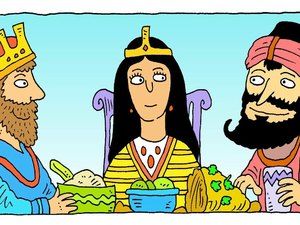
The desire to wipe out the Jews has been going on for thousands of years. The Jews have always been everybody’s favorite scapegoat. The Egyptians tried it under the Pharaohs. The Iranians — that’s right —tried it under Haman. One of the strongest persecutions came under the Roman Empire. Not only was the Temple burnt in Jerusalem, but Jews ended up being dispersed throughout the Empire.  

When Constantine became Emperor in 313, he passed the edict of Milan in 315, which made Christianity legal, but not Judaism. After the Christian religion spread and the Council of Nicaea was held, the Christian Sabbath was determined to be held on Sunday, driving a wedge between Christianity and Judaism. This change did not only make the Jews stand out as heretics, but they were no longer considered citizens of Rome. The idea that the Christian people were now the new chosen people of God – rather than the Jews – is called Replacement Theology.

Later there were the Spanish inquisitors, the Tsarist pogroms. And then Hitler, whose extermination program was the most ambitious and successful of all.

What about today’s Muslim hatred of Jews?  Some people seek to trace the issue back to Abraham’s two sons, Isaac and Ishmael, or Isaac’s two sons, Jacob and Esau. Whatever enmity existed between the two offspring, there was not a command of God to kill the Jews.  The immense hatred of the Jews began in the time of Mohammed, by Mohammed, and it is alleged that Allah gave the command for it. – Anger is a cancer of the soul. It becomes the driving force for murdering someone.  

Recalling this history is important. For decades, the United Nations have led a campaign to demonize and delegitimize Israel. That campaign is now set to sharply escalate.

Just last week, the United Nations approved a $4.2 million budget to establish a so-called Commission of Inquiry—essentially a Grand Inquisition targeting and vilifying Israel. “Under the auspices of the Human Rights Council, a body dominated by such notorious human rights violators as China, Russia, Cuba, Pakistan, Qatar and Venezuela, an 18-member staff will be led by Navi Pillay. The former U.N. high commissioner for human rights has “an appalling record on Israel,” in the considered judgment of Hillel Neuer, executive director of U.N. Watch.” (Clifford May – JNS)

In the in the book of Ezekiel we read a detailed prophecy about a future war campaign against Israel. This war is known as the “Gog and Magog War” because the people of Magog and their leader Gog will lead the attack against Israel. ThisGog and Magog war he mentions, will take place in the Mountains of Israel, while the  Armageddon battle will be in the valley of Megiddo. The Armageddon battle involves all world nations while the Gog and Magog war involves only selected nations led by Russia. China is not in the Gog and Magog war but in the Armageddon battle.

According to scripture, this will happen before the Messiah comes. That alone gives us a clue why the world is trying to wipe out Israel and the Jews. They don’t want the Messiah to come. And what spiritual force is behind that? It has to be Satan himself. I believe each attempt to wipe out the Jewish people has been, is, and will be, satanically inspired.

One of the most important aspects of the Redemption is the promise of the ingathering of the exiles from the Diaspora. We see that happening right now. And we see the preparations for the battle happening at the same time. Twenty-five hundred years ago, Zechariah foretold that Jerusalem would be surrounded by enemy nations in the last days. Today we see this happening.

And that will be God’s final solution: “Then the Lord will be king over the whole world. At that time there will be only one Lord, and his name will be the only name.” (Zechariah 14:9)

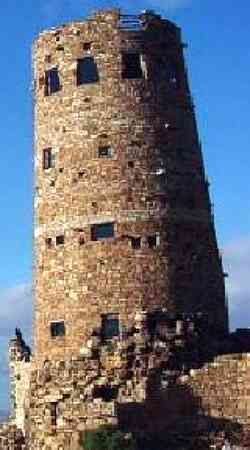
Migdal Eder (The tower of the flock)

Migdal Eder (מגדל־עדר‎ )was a tower mentioned in the biblical book of Genesis 35:21, in the context of the death of Jacob‘s wife, Rachel. The biblical record locates it near the present-day city of Bethlehem.

With the establishment of Temple worship in Jerusalem, the fields outside of Bethlehem became the place where a special group of shepherds raised the lambs that were sacrificed in the Temple. Being themselves under special Rabbinical care, they would strictly maintain a ceremonially clean stable for a birthing place. The Tower of the Flock was used for birthing ewes, and the surround fields were where these shepherds grazed their flocks. These shepherds customarily kept their flocks outdoors twenty-four hours a day every day of the year, but brought the ewes in to deliver their lambs where they could be carefully cared for. 

A watch tower just like this was used by the shepherds for protection from their enemies and wild beasts. 

A passage from the Mishnah (Shekelim 7:4) leads to the conclusion that the flocks which pastured there were destined for Temple service. These were not just any flock and herd. The shepherds who kept them were men who were specifically trained for this royal task. They were educated in what an animal, that was to be sacrificed, had to be and it was their job to make sure that none of the animals were hurt, damaged, or blemished. These lambs were apparently wrapped in “swaddling cloths” to protect them from injury right after they were born, until they stopped trashing around.

Some scholars believe that it was to this place that Joseph took Mary.

Why we support Israel

.

In the beginning (Bereshit 12) G-D promised Abraham a land and a nation. The promise was made in a covenant between G-D and his people, and HE will never go back on that promise.  Israel is the land the Almighty chose for his people when HE made his covenant with Abraham. 

“But you, Israel, my servant, Jacob, whom I have chosen, you descendants of Abraham my friend, I took you from the ends of the earth; from its farthest corners I called you. I said, ‘You are my servant’; I have chosen you and have not rejected you.”  –Isaiah 41:8-9

The Biblical region of Judea and Samaria was given to Abraham, Isaac, Jacob and their descendants, forever, 4000 years ago. Because of sin, disobedience and lack of belief, most Jews were driven from the land around 70 AD. However, there were always some Jews living in the Land and Jews around the world have prayed to God three times a day, each day, to return His people to Zion. The prophets foretold the ingathering of the exiles and the rebuilding of the Land in the latter days. (Ezekiel 36, Amos 9 to mention a few).

 In 1948, Israel was reborn as a sovereign nation and in 1967 the heartland of Israel, the media calls“West Bank”, was reunited with the rest of the nation in the prophetic, miraculous Six Day War. Although Jordan occupied half of Jerusalem, Judea and Samaria for 19 years and Egypt occupied the Gaza Strip during the same period, there was never any attempt to form a Palestinian State at this time. The land remained barren until the Jews returned to cultivate it. This is truly the fulfillment of prophecy.

As a matter of fact, when Israel was reborn as a nation, 160 other countries acknowledged her as a non-racist democracy. Today, Arabs hold public office in the Knesset and high positions in its military. This nation believes people are made in the image of G-D and endowed with inalienable rights. 

It’s infuriating to hear Israel demonized by the mainstream media, the U.N. and people who have little to no understanding of biblical and historical facts. Our group should help clear away some of that misinformation and outright faulty thinking. 

Introduce Yourself (Example Post)

This is an example post, originally published as part of Blogging University. Enroll in one of our ten programs, and start your blog right.

You’re going to publish a post today. Don’t worry about how your blog looks. Don’t worry if you haven’t given it a name yet, or you’re feeling overwhelmed. Just click the “New Post” button, and tell us why you’re here.

Why do this?

  • Because it gives new readers context. What are you about? Why should they read your blog?
  • Because it will help you focus your own ideas about your blog and what you’d like to do with it.

The post can be short or long, a personal intro to your life or a bloggy mission statement, a manifesto for the future or a simple outline of your the types of things you hope to publish.

To help you get started, here are a few questions:

  • Why are you blogging publicly, rather than keeping a personal journal?
  • What topics do you think you’ll write about?
  • Who would you love to connect with via your blog?
  • If you blog successfully throughout the next year, what would you hope to have accomplished?

You’re not locked into any of this; one of the wonderful things about blogs is how they constantly evolve as we learn, grow, and interact with one another — but it’s good to know where and why you started, and articulating your goals may just give you a few other post ideas.

Can’t think how to get started? Just write the first thing that pops into your head. Anne Lamott, author of a book on writing we love, says that you need to give yourself permission to write a “crappy first draft”. Anne makes a great point — just start writing, and worry about editing it later.

When you’re ready to publish, give your post three to five tags that describe your blog’s focus — writing, photography, fiction, parenting, food, cars, movies, sports, whatever. These tags will help others who care about your topics find you in the Reader. Make sure one of the tags is “zerotohero,” so other new bloggers can find you, too.

Introduce Yourself (Example Post)

This is an example post, originally published as part of Blogging University. Enroll in one of our ten programs, and start your blog right.

You’re going to publish a post today. Don’t worry about how your blog looks. Don’t worry if you haven’t given it a name yet, or you’re feeling overwhelmed. Just click the “New Post” button, and tell us why you’re here.

Why do this?

  • Because it gives new readers context. What are you about? Why should they read your blog?
  • Because it will help you focus your own ideas about your blog and what you’d like to do with it.

The post can be short or long, a personal intro to your life or a bloggy mission statement, a manifesto for the future or a simple outline of your the types of things you hope to publish.

To help you get started, here are a few questions:

  • Why are you blogging publicly, rather than keeping a personal journal?
  • What topics do you think you’ll write about?
  • Who would you love to connect with via your blog?
  • If you blog successfully throughout the next year, what would you hope to have accomplished?

You’re not locked into any of this; one of the wonderful things about blogs is how they constantly evolve as we learn, grow, and interact with one another — but it’s good to know where and why you started, and articulating your goals may just give you a few other post ideas.

Can’t think how to get started? Just write the first thing that pops into your head. Anne Lamott, author of a book on writing we love, says that you need to give yourself permission to write a “crappy first draft”. Anne makes a great point — just start writing, and worry about editing it later.

When you’re ready to publish, give your post three to five tags that describe your blog’s focus — writing, photography, fiction, parenting, food, cars, movies, sports, whatever. These tags will help others who care about your topics find you in the Reader. Make sure one of the tags is “zerotohero,” so other new bloggers can find you, too.