The Miracles of Hanukkah
In 175 BCE, a new ruler, Antiochus IV, ascended to the throne of Syria. As did many rulers, he added the title Epiphanes (“God Manifest”) to his name; but many people referred to him instead as Antiochus Epimames (“The Madman”).
Antiochus IV. took over Jerusalem and erected an altar to the pagan god Zeus in the Temple. He sent his Greco-Assyrian armies to Jerusalem to force the Jewish people to make a sacrifice to Zeus. The sacrifice was an unkosher animal – a pig -, desecrating the altar of the Holy Temple. Sadly, many Jews were compromising. Antiochus then ordered his soldiers to go from town to town to force all the Jews to sacrifice pigs. – But it all stopped when the Greco-Assyrian soldiers came to a Jewish town called Modi’in. While they were trying to force the Jews there to make a sacrifice to Zeus, a priest by the name of Mathattias said: “NO”. That inspired the rest of the Jewish onlookers so much that they turned on the Greco-Assyrian army and began to drive them out of Modi’in. Eventually more and more Jewish people joined the movement and advanced to conquer Jerusalem, where they recovered the Temple. Against all odds, these freedom fighters beat the entire army of Antiochus IV, – it was a great miracle – God delivered the many into the hands of a few. In 164 BCE they re-dedicated the Temple back to God, and that is where the name Hanukkah comes from. The Hebrew word Hanukkah ( חֲנֻכָּה ) means dedication. Derived from the root חָנַךְ (chanak), meaning “to dedicate” or “to initiate. The term “hanukkah” primarily refers to the concept of dedication or consecration. It is used in the context of dedicating a building, an altar, or other sacred objects to God and setting them apart for a holy purpose.
The Jews rebuilt the altar and lit the menorah with the remaining kosher oil they found, which was only enough to last for one day. Another great miracle happened, the Menorah stayed lit for another 7 days, a total of eight days, until they had a new batch of oil to keep the flame burning. The eternal light was symbolic of God’s presence among his people.
So, Hanukkah celebrates the dual miracle of fighting and lighting. It is therefore called the Feast of Dedication and the Festival of Lights. It commemorates the eternal God delivering his people. He is bigger than the circumstances that surround His people if they have faith to believe in Him. He delivered them from the Egyptians, from the Greeks, from the Nazis, so never lose hope! Faith and Hope is what the lights of the Hanukkah candles represent. The fact that we can take God at his word and believe for miracles.
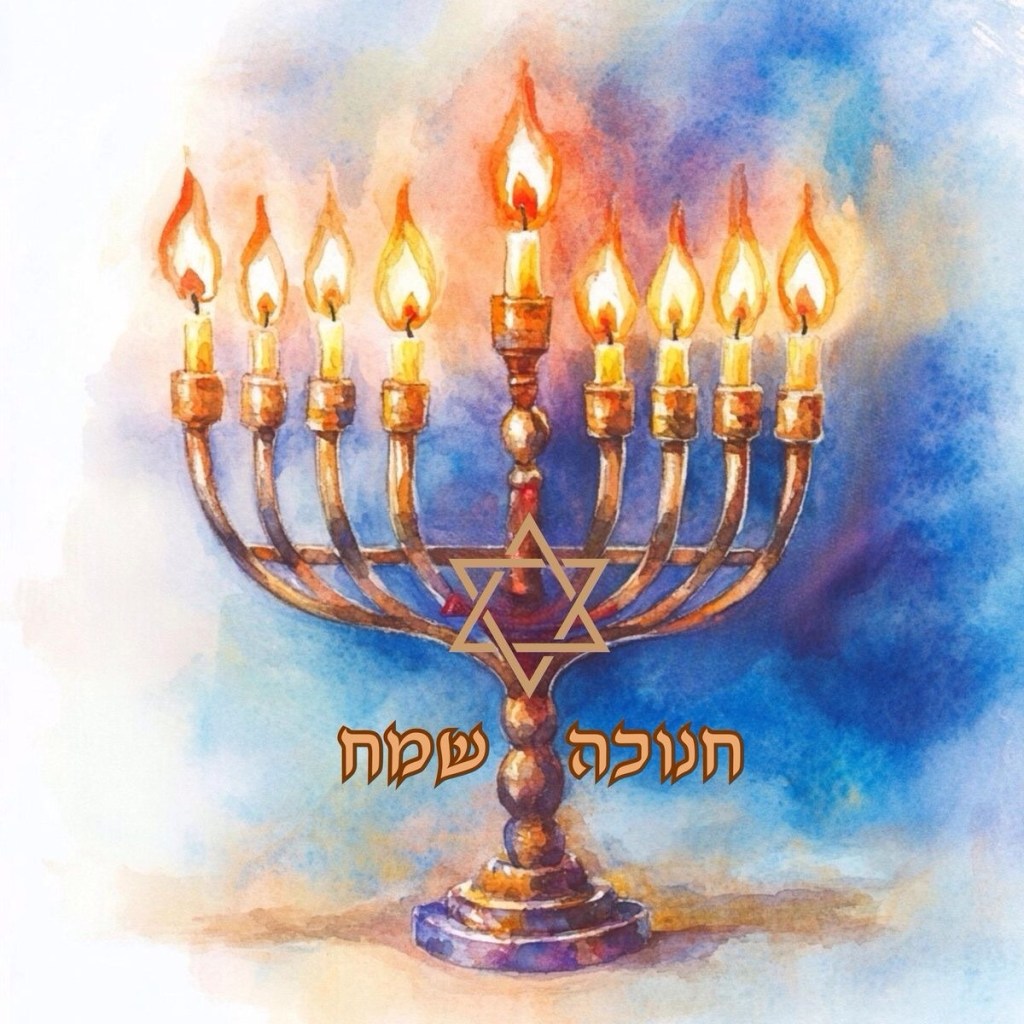
A Hanukkah menorah, or hanukkiah, is a nine-branched candle holder that is lit during the eight-days of Hanukkah. Eight of the nine branches hold lights (candles or oil lamps) that symbolize the eight nights of the holiday; on each night, one more light is lit than the previous night, until on the final night all eight branches are ignited. The ninth branch holds a candle, called the shamash (“helper” or “servant”), which is used to light the other eight candles. The candles remind us that God can win against all odds and therefore represent his deliverance and salvation.
Interestingly Hanukkah is not mentioned anyplace in the Tanach, but only in the New Testament. The apostle John wrote:” Then came Hanukkah in Yerushalayim. It was winter, and Yeshua was walking around inside the Temple area, in Shlomo’s Colonnade.” (John 10:22) As a Jew he was celebrating the Feast of Dedication with the Jewish people. Dedication is the English word of the Hebrew word Hanukkah. Note that Jesus did not celebrate Christmas but the Jewish holiday Hanukkah.

 Standing with Israel